





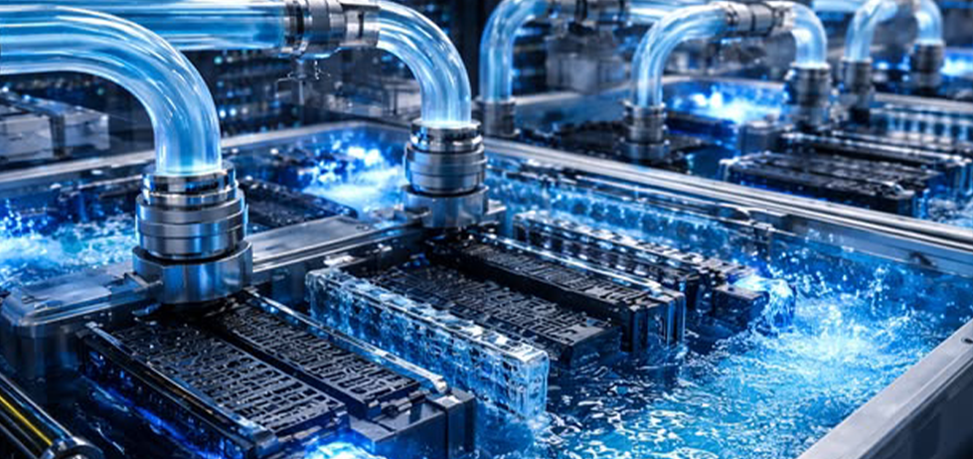
The digital world is racing forward at an unprecedented pace, but it is about to slam into a harsh physical reality. The explosive global demand for generative AI has triggered an invisible infrastructure crisis.
We aren’t running out of clever algorithms or training data; we are running out of electricity and cooling capacity.
Every single time an AI model generates an image, writes code, or automates a corporate workflow, thousands of processing chips miles away generate intense physical heat. The future of artificial intelligence is no longer just a software challenge—it has officially become a thermodynamics problem.
Straining the Global Power Grid
Training an advanced, next-generation AI model requires tens of thousands of specialized Graphics Processing Units (GPUs) running continuously for months at a time. The scale of electricity required is staggering. A single modern AI data center can consume as much power as a small city, putting immense strain on regional electrical grids.
Tech giants are no longer just looking for cheap land or friendly tax zones to build their facilities. Today, the ultimate corporate real estate asset is guaranteed, uninterrupted access to gigawatts of power.
In many regions, the rapid expansion of these computing hubs is clashing directly with municipal clean-energy goals, forcing tech companies to heavily invest in alternative energy infrastructure to avoid blacking out local communities.
The Shift to Direct-to-Chip Liquid Cooling
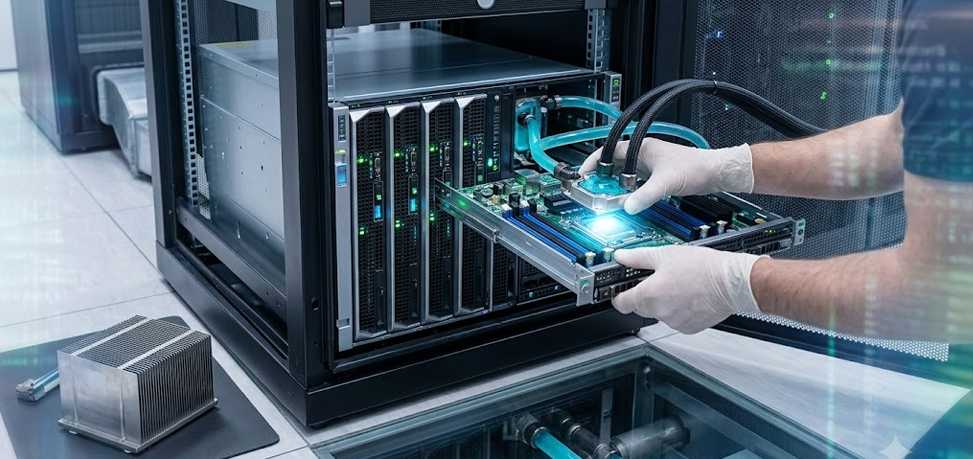
For decades, standard data centers relied on massive, industrial air conditioning units to blow cold air through aisles of server racks. While this worked for traditional web hosting, air cooling is completely insufficient for the dense, blazing-hot hardware arrays required by modern AI. Blowing air across a chip that operates at extreme temperatures is highly inefficient and wastes massive amounts of electricity just to run the fans.
To break through this thermodynamic bottleneck, the hardware industry is undergoing a structural transition to direct-to-chip liquid cooling and full immersion cooling.
[Traditional Air Cooling]  -> Heavy Fans -> Blows Chilled Air -> Inefficient Heat Transfer
[Direct-to-Chip Cooling]  -> Sealed Tubes -> Circulates Liquid -> 10x Faster Heat Dissipation
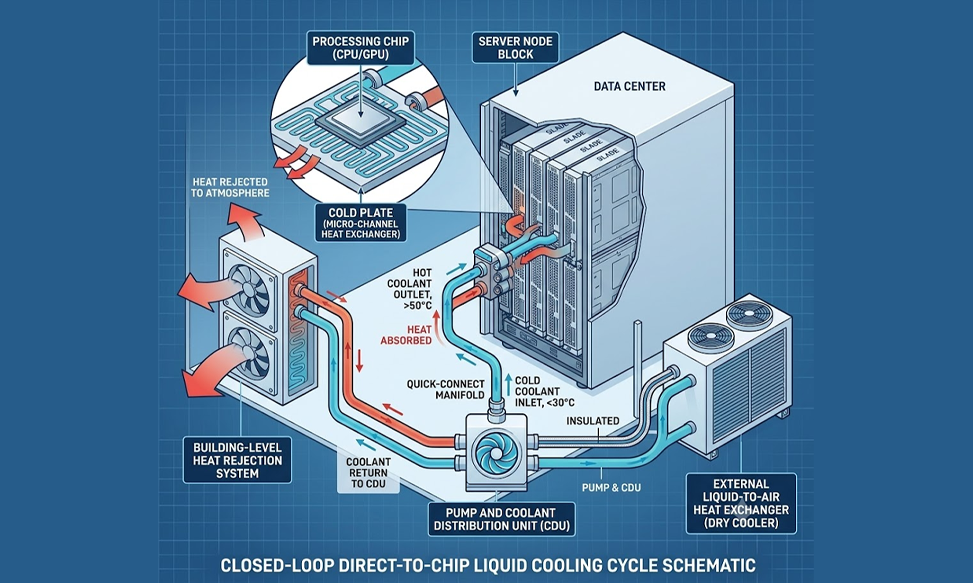
In a direct-to-chip system, a sealed loop of non-conductive, dielectric liquid is piped directly onto a metal plate resting on top of the processing unit. Because liquids absorb and transfer heat thousands of times more effectively than air, this method whisks heat away instantly.
By eliminating the need for massive air-chilling units, facilities can slash their cooling energy consumption by up to 90%, allowing servers to run at peak operational speeds without risking thermal damage.
AI-Optimized Smart Grids
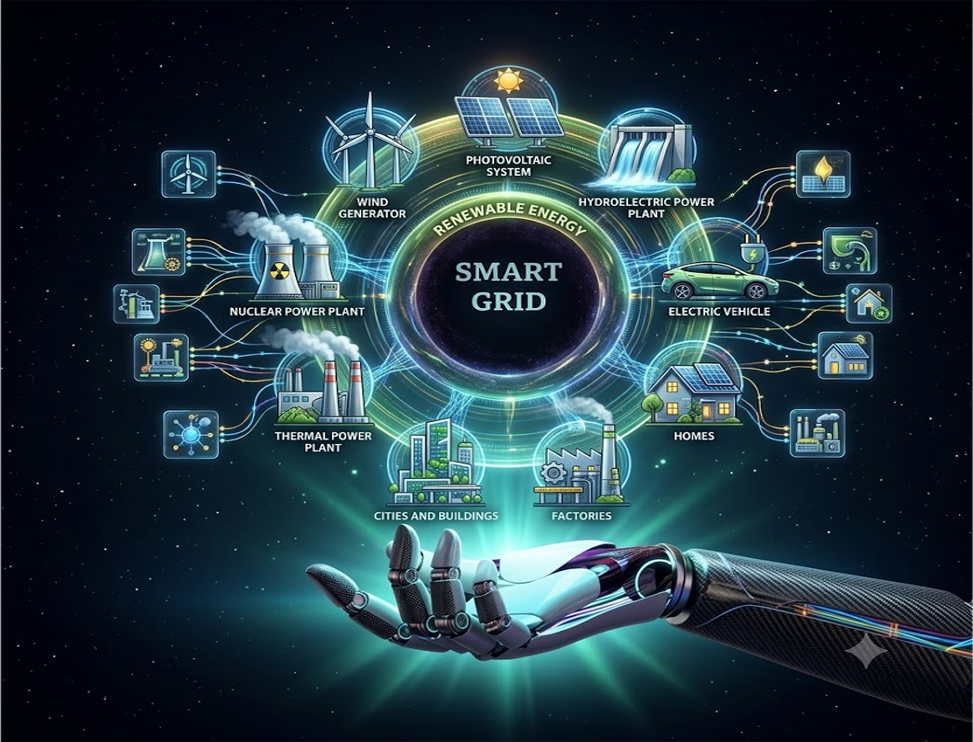
Ironically, tech companies are deploying artificial intelligence itself to solve the massive energy crisis caused by AI. Tech giants are integrating deep learning algorithms directly into the smart grids and energy distribution systems that feed their data centers.
These specialized AI models monitor real-time variables across the entire power network, tracking regional weather patterns, local consumer power demands, and fluctuating outputs from renewable energy sources like wind farms and solar fields.
If a cloud block passes over a major solar array in one state, the smart grid AI instantly recalculates the load. It can automatically shift massive, non-urgent AI training workloads over to a sister data center located thousands of miles away where wind or hydroelectric power is currently peaking.
By dynamically shifting computational weight around the globe to chase renewable energy surpluses, AI is actively teaching infrastructure how to sustain itself.
The Image was created by an AI.



Leave a comment