





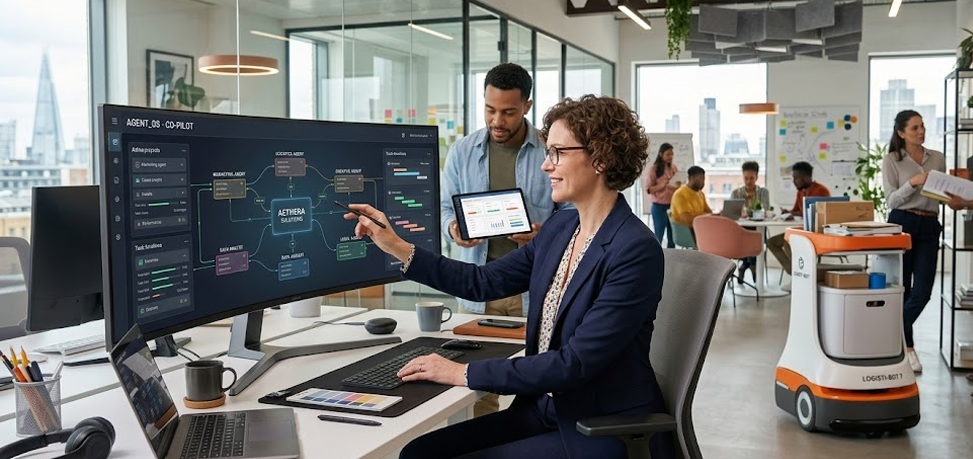
The traditional definition of a corporate workforce is undergoing a profound structural shift. For decades, automation was viewed through a binary lens: a task was either performed entirely by a human or completely offloaded to a machine.
Today, that barrier has vanished. The modern workplace is organizing into decentralized “micro-enterprises”—small, highly agile human teams that operate in tandem with networks of intelligent software agents and physical service robots.
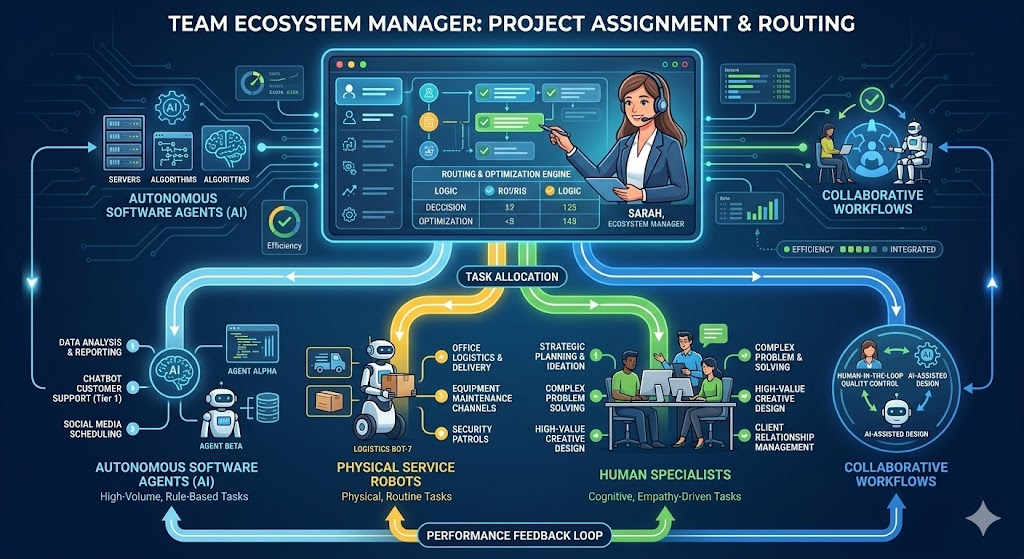
The Division of Labor: Speed vs. Strategy
In a hybrid micro-enterprise, efficiency isn’t achieved by replacing people, but by optimizing the unique strengths of both biological and digital workers. This partnership allows businesses to scale their output exponentially without bloating their headcounts.
[Repetitive Data & Logistics] -> Handled by AI & Service Robots -> Execution Speed
[Creativity, Vision & Empathy] -> Cultivated by Human Teams      -> Strategic Value
By establishing a clear division of labor, businesses can unlock entirely new levels of productivity:
- The Automated Engine: Physical service robots and software agents thrive on consistency. They handle high-volume, predictable workloads—such as tracking complex inventory lines, processing routine administrative data, or managing frontline logistics in retail and hospitality—operating continuously without fatigue.
- The Human Core: Freed from the burden of repetitive tasks, human workers are elevated to high-value roles. Humans focus their energy where machines fail: long-term strategic vision, creative problem-solving, abstract design, and deep client relationships.
Service Robots on the Frontlines
While digital AI agents optimize background workflows, physical service robots are redefining face-to-face operational environments. From boutique hotels to busy retail floors, automated assistants are integrating seamlessly into daily operations.
Rather than isolating machines behind safety cages, modern service robots utilize advanced computer vision, LiDAR, and real-time spatial mapping to navigate dynamic, crowded environments alongside human footprints.
Real-World Hybrid Environments:
- Hospitality: Autonomous room-service delivery robots navigate hotel elevators and hallways to drop off amenities, allowing front-desk staff to dedicate more time to personalized guest onboarding and complex customer service requests.
- Retail & Inventory: While autonomous floor rovers scan shelves overnight to track stock levels with pinpoint accuracy, human store associates spend their shifts engaging with customers, solving unique shopping needs, and styling displays.
- Medical Logistics: In modern healthcare facilities, mobile logistics robots transport linens, meals, and laboratory samples through secure corridors, ensuring nurses and doctors stay at the bedside focusing on patient care.
The Rising Value of Human-Centric Skills
As the technical execution of routine tasks becomes increasingly automated, the baseline value of uniquely human traits is skyrocketing. In a world saturated with computing power, the ultimate corporate asset is human emotional intelligence.
Operating a successful micro-enterprise requires strong collaboration, cultural empathy, and nuanced ethical reasoning. Managing a hybrid team means treating AI and robotics as supportive infrastructure, leaving humans free to foster authentic community connections, build brand trust, and steer corporate ethics. The future of work isn’t a race against the machine; it is an era of unparalleled leverage, powered by the humans who direct them.
The image is creadted by AI.


Leave a comment