





For decades, the public conversation surrounding sleep has focused on one single metric: quantity. We are constantly told that health is a simple matter of getting 7 to 8 hours of sleep per night. Yet millions of people diligently clock their 8 hours only to wake up feeling exhausted, plagued by daytime brain fog, and dependent on caffeine to function.
The reason is simple: your body does not just care about how long you sleep; it cares deeply about when you sleep and the quality of the hormonal cycles during that rest. Welcome to the frontier of circadian biology. By mastering light hygiene—controlling when specific wavelengths of light hit your eyes—you can unlock near-instant improvements in your sleep depth, daytime focus, and metabolic health.
The Master Clock: The Suprachiasmatic Nucleus (SCN)
Every single tissue and organ in your body operates on an internal, roughly 24-hour cellular timer known as a circadian rhythm. Your liver, heart, muscles, and skin all have individual peripheral clocks, but they are entirely dependent on a central master clock to stay synchronized.
This master clock is the Suprachiasmatic Nucleus (SCN), a tiny cluster of 20,000 neurons tucked away inside the hypothalamus of the brain, positioned directly above the optic nerves.
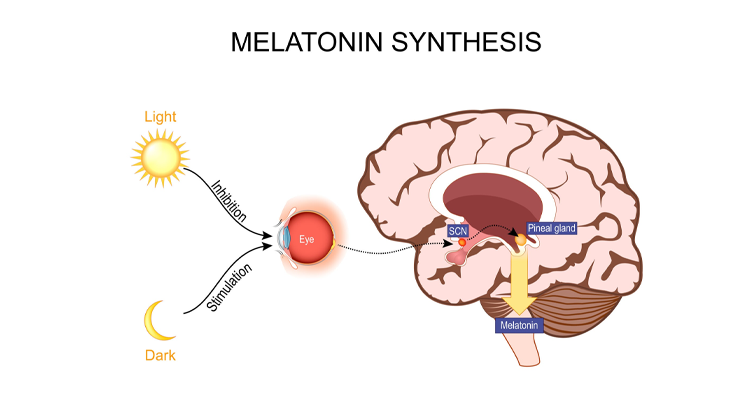
[Sunlight Enters Eye] -> Stimulates ipRGC Receptors -> Fires Signal to SCN -> Sets Circadian Timer -> Suppresses Melatonin / Starts Cortisol PulseThe SCN does not have a window to look outside; it relies entirely on your eyes to interpret the state of the solar day. Specialized cells in your retina called intrinsically photosensitive retinal ganglion cells (ipRGCs) act as direct light sensors. These cells do not contribute to your conscious vision. Instead, they absorb specific photon wavelengths and transmit direct electrical signals straight to the SCN, informing your brain exactly what time of day it is.
The Chemical Switch: Cortisol vs. Melatonin
To maximize your daytime energy and nighttime recovery, your master clock orchestrates a perfectly timed dance between two primary hormones: cortisol and melatonin. When your light hygiene is broken, these two lines cross at the wrong times, causing chronic circadian mismatch.
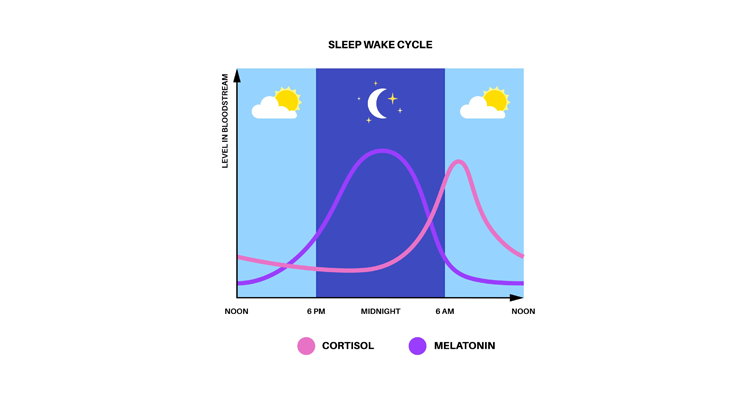
The Optimal Hormonal Timeline:
- The Morning Cortisol Spike: Within 30 to 60 minutes of waking, your body expects a massive release of cortisol. This spike is vital—it acts as an internal alarm clock, raising your body temperature, sharpening your mental focus, and setting a timer that dictates exactly when melatonin will release later that evening.
- The Evening Melatonin Release: As darkness falls, the pineal gland should begin secreting melatonin, the hormone responsible for lowering your core temperature and pulling your brain down into restorative, deep delta-wave sleep states.
Modern Light Pollution: The Midnight Sun Blueprint
The primary disruptor of modern metabolic and sleep health is Artificial Light at Night (ALAN). For millions of years, sunset meant the complete absence of blue-spectrum wavelengths. Today, our homes are constantly flooded with high-efficiency LED lights, bright televisions, and smartphone screens.
When you look at a smartphone screen at 11:00 PM, the concentrated blue wavelengths hit your retina’s ipRGC receptors. Even if you only look at the screen for a brief minute, your SCN registers this as high-noon sunlight.
The brain immediately halts the synthesis of melatonin, delaying your deep sleep cycles by hours. You might still fall asleep due to sheer exhaustion, but your architecture will lack the vital early-night deep sleep phases where physical cellular repair actually occurs.
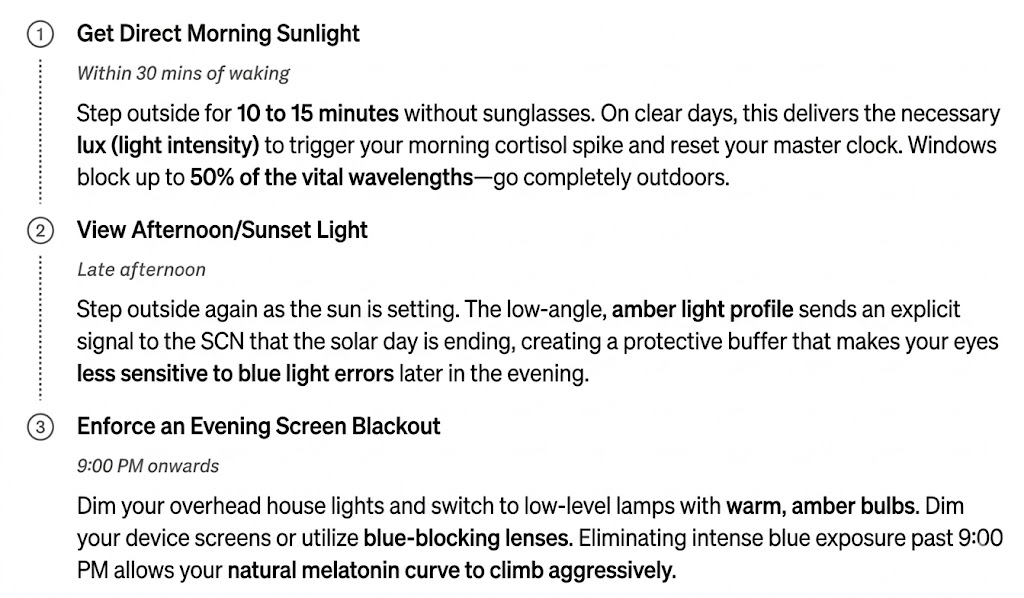
Your Actionable Daily Light Hygiene Protocol
Optimizing your circadian biology is entirely free and yields massive compound benefits for your hormonal profile. Implement these three foundational adjustments:






Leave a comment