





For generations, science treated the human brain as the undisputed, isolated control center of our emotions, thoughts, and moods. If you experienced chronic anxiety, brain fog, or mood swings, the medical consensus was to look entirely between your ears.
But a revolutionary paradigm shift in medicine has revealed that we actually have a “second brain” hidden inside our digestive walls. Containing over 100 million neurons—more than the spinal cord—this system is known as the Enteric Nervous System (ENS). Even more astonishingly, the trillions of bacteria living inside your digestive tract, collectively called the gut microbiome, are actively pulling the levers of your mental health, cognitive processing, and emotional resilience.
The Vagus Nerve: The Bi-Directional Information Highway
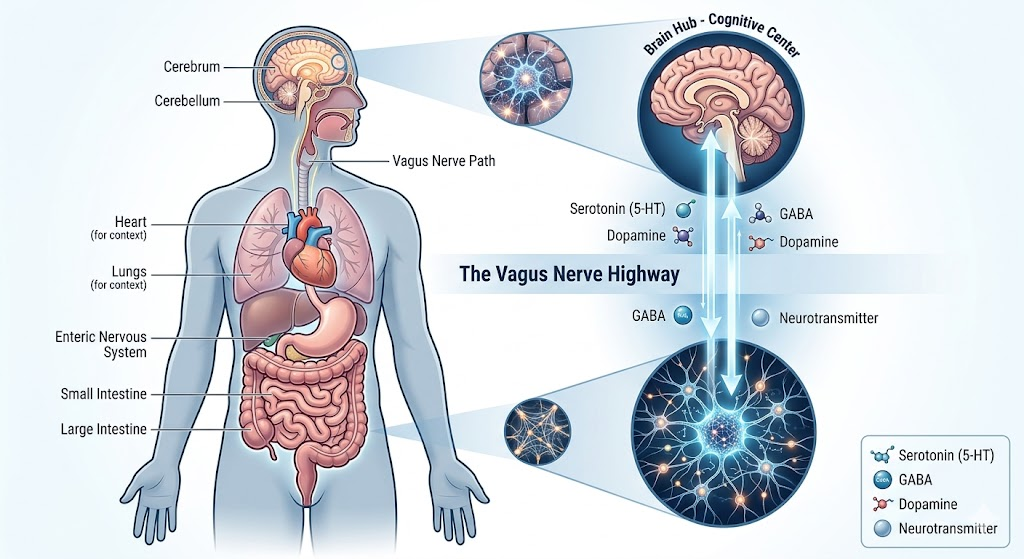
The communication network between your gut and your head is called the Gut-Brain Axis. While they are physically separated, they are in constant, instantaneous dialogue through the vagus nerve—the longest and most complex cranial nerve in the human body.
Historically, scientists believed the brain sent commands down to the gut (such as getting butterflies when nervous). However, modern neurological tracking reveals that the communication is overwhelmingly a bottom-up operation.
[Gut Microbiome] -> Generates 90% of Serotonin -> Signals Vagus Nerve -> Upward Transmission -> [Brain Regulates Mood]An incredible 80% to 90% of the nerve fibers in the vagus nerve are afferent, meaning they send sensory information upward from the gut directly into the brain’s emotional processing centers. If your gut lining is inflamed or your microbiome is out of balance, your gut physically broadcasts a constant distress signal to your brain, mimicking the physiological symptoms of chronic anxiety and mental fatigue.
Neurotransmitter Factories in the Intestines
When we think of neurotransmitters like serotonin (the “happy molecule”) and dopamine (the “motivation molecule”), we naturally assume they are manufactured exclusively by the brain. In reality, the gut is the primary factory.
The specialized cells and microbes in your gut lining are responsible for synthesizing the vast majority of these mood-regulating chemicals.
The Microbial Chemical Factory:
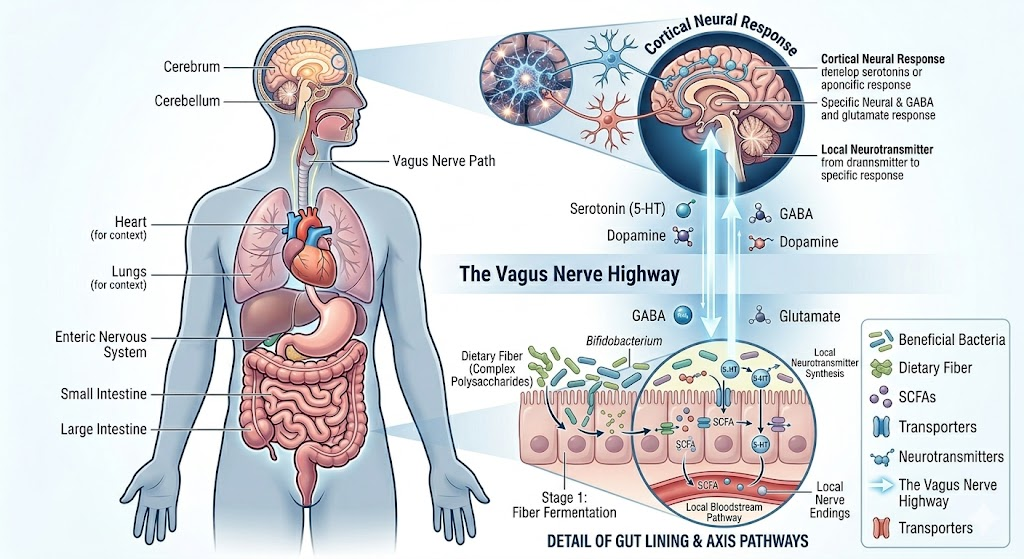
- Serotonin Production: Roughly 95% of the body’s total serotonin supply is produced in the plasma and cells of the gut. Gut microbes interact with these cells to stimulate serotonin synthesis, directly affecting your sleep, appetite, pain tolerance, and emotional baseline.
- GABA Synthesis: Specific beneficial bacteria strains (like Lactobacillus and Bifidobacterium) naturally produce Gamma-Aminobutyric Acid (GABA). GABA is the central nervous system’s primary inhibitory neurotransmitter—it acts as a natural brake fluid, calming overactive neural firing and reducing acute stress.
- Short-Chain Fatty Acids (SCFAs): As your gut bacteria ferment dietary fiber, they create critical byproducts called SCFAs (like butyrate). These molecules travel to the head and help maintain the structural integrity of the blood-brain barrier, protecting the brain from systemic inflammation.
The Leaky Gut, Leaky Brain Connection
When the delicate balance of the gut microbiome is disrupted—a state known as dysbiosis—the physical lining of your digestive tract weakens. A healthy gut barrier has tight junctions that allow only vital nutrients to pass into the bloodstream while keeping harmful bacteria and toxins out.
Under chronic stress, poor diet, or antibiotic overuse, these junctions can widen, creating a condition known as intestinal permeability, or “leaky gut.”
When toxic bacterial cell walls (known as Lipopolysaccharides, or LPS) escape through a leaky gut into your systemic circulation, they trigger an immediate, body-wide inflammatory response. These inflammatory markers can breach the blood-brain barrier, triggering specialized immune cells in the brain called microglia. The result? Neuroinflammation, which manifests clinically as chronic brain fog, cognitive fatigue, and a significantly heightened vulnerability to depressive episodes.






Leave a comment