





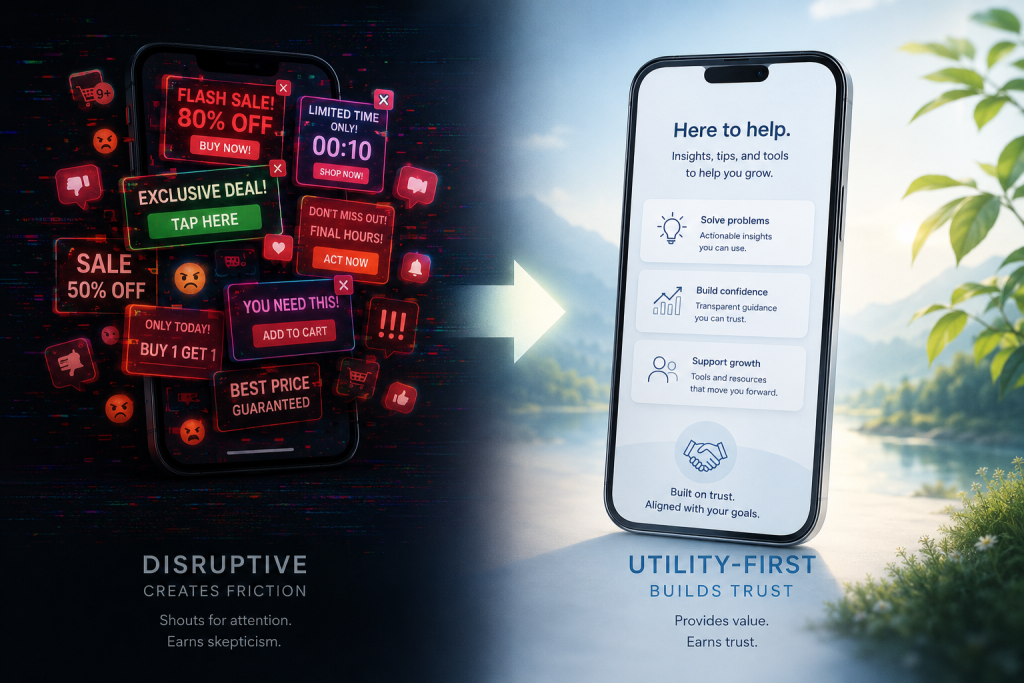
In an era defined by endless scrolling and skepticism toward corporate messaging, the hardest currency to earn on social media isn’t attention—it’s trust.
For too long, brands have treated social channels as megaphones for disruption rather than platforms for connection. This outdated approach maximizes transactional friction: the gap between a customer realizing they have a problem and believing your solution is the right one.
The future of profitable social commerce belongs to companies that prioritize a customer-first approach. By shifting your strategy from generic broadcasting to proactive utility, you transform your social channels from leaky funnels into trust-based ecosystems where sales become a natural outcome of genuine helpfulness.
1. Stop Interrupting, Start Solving
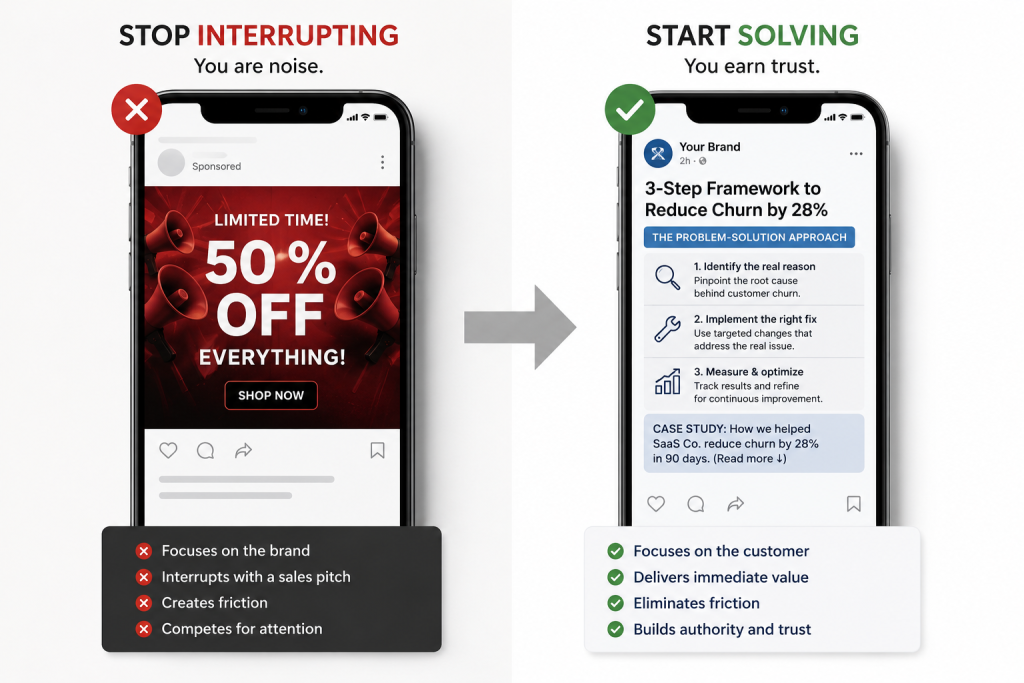
The modern consumer has developed a finely tuned filter against disruption. If your content merely interrupts their feed with a sales pitch, you are competing for their attention under the worst possible conditions. You are noise.
To move from noise to authority, you must stop asking for attention and start earning it. A customer-first approach dictates that your content should solve a specific, high-value problem instantly, in the feed, with zero friction.
Instead of broadcasting how great your service is (high friction), distribute a framework, a simple checklist, or a case study illustrating how a previous client used your methodology to solve that exact problem. In the digital economy, authority is utility made visible.
2. Engineer Content That Does Work, Not Just Describes It
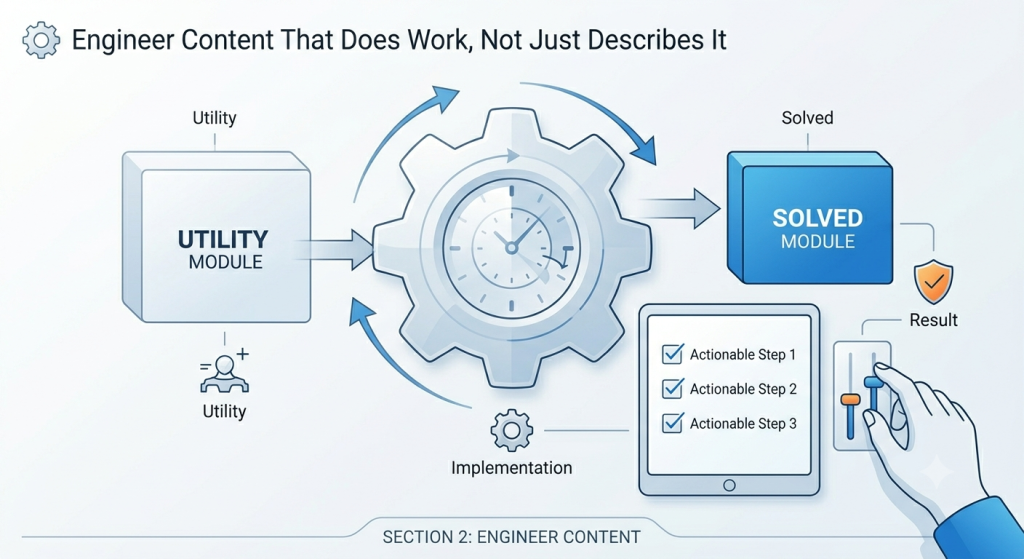
Trust is built through transparency and validation. The utility-first content framework demands that you move past passive description. Generic thought leadership is common; actionable implementation is rare.
Every piece of content you distribute should be structured like an executable script. Your goal is not to convince the user that you are smart; your goal is to help them get a small win. When a user can take a piece of your free content—be it a technical formula, an operational workflow, or a creative template—and see a localized benefit immediately, the trust barrier dissolves.
When trust is established through utility, the sales conversation changes from a ‘why should I pick you?’ defense into a ‘how soon can we start?’ blueprint.
3. Visualize the Transformation (For the Audience and Your Data)
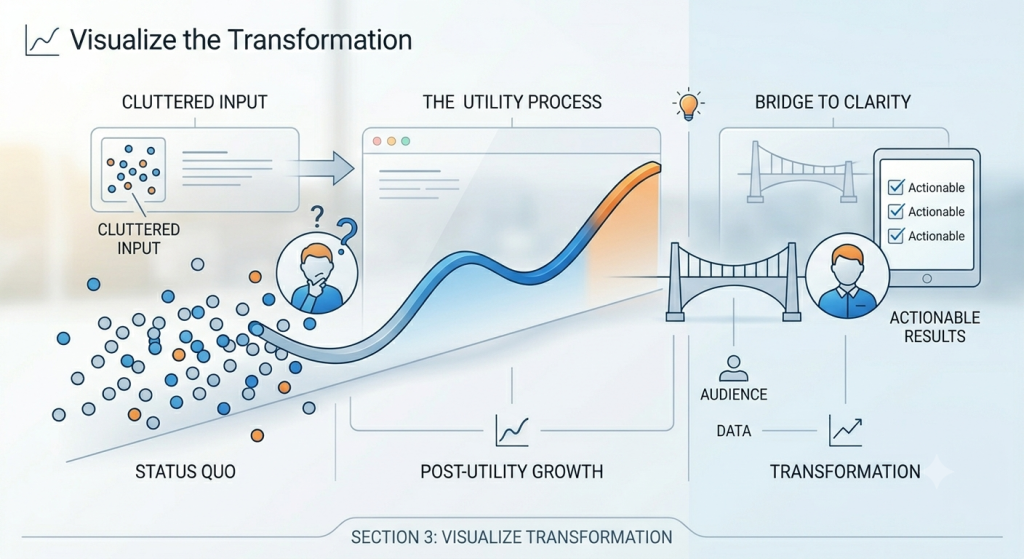
Implementing a customer-first, utility-driven model changes everything: the visual language you use to attract clients and the resulting data you use to make business decisions.
To make this transformation clear, your visuals must change. You can no longer rely on stock images of people celebrating vague successes. Your visuals must now emphasize clean data and clear human connections. You are showing that when friction is removed, both clarity and connection can grow simultaneously.
The transformation isn’t just about what your clients see; it’s about what your business realizes. Shifting from noise to utility transforms the outcomes.
4. Measure What Matters: Trust Indicators Over Vanity Metrics
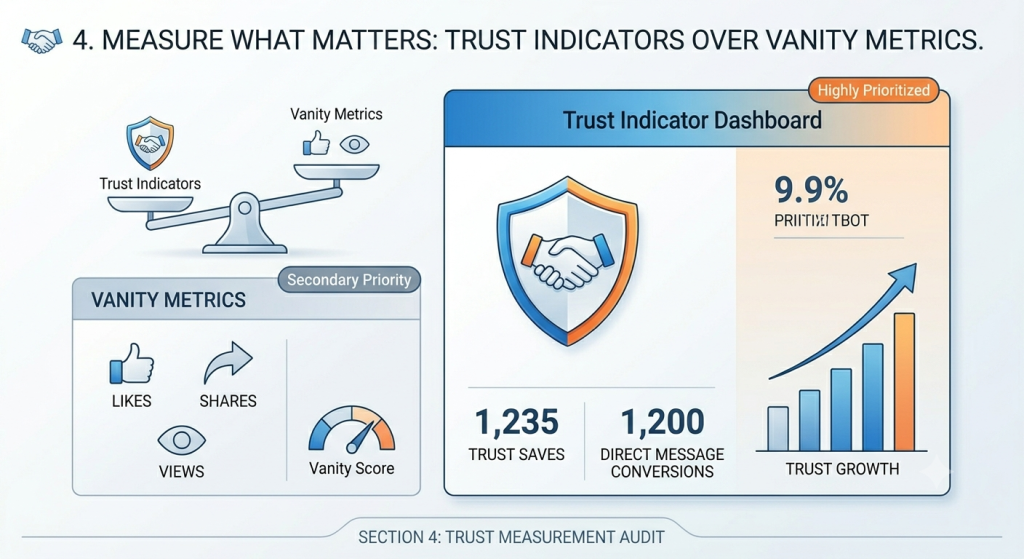
To manage this new trust-based ecosystem effectively, you must audit your data differently. Standard engagement metrics—likes, generic comments, and shares—are often vanity metrics. They are too easy to manipulate and do not inherently correlate with trust or conversion.
You must optimize for high-utility Trust Indicators:
- Detailed Saves: Are users bookmarking your frameworks? (This indicates future utility).
- Specific Comments: Are users asking clarifying questions about implementing your advice? (This indicates authority validation).
- Direct Message Volume (Keyword Triggered): Are users actively opting into friction-free conversion funnels (e.g., “DM me
BluePrintfor the workflow script”)? This shows high-intent behavior captured in their native environment.
If you are serious about growing your sales on social media, you must stop operating as a broadcaster and start operating as a trust engineer. Audit your current social footprint: If your content provides immediate, standalone utility, you are building an asset. If it is simply shouting into the void, you are incurring cost without generating yield.



Leave a comment